
Helcim vs Stripe Fees in 2026: Which Is Cheaper for Small Businesses?
Introduction
Helcim and Stripe are both popular payment processors, but their fee structures work very differently. This comparison breaks down real processing costs so you can see which option is cheaper as your business grows.
Quick Look
Stripe’s flat-rate pricing works well at low volume, but Helcim’s interchange-plus model usually becomes cheaper as your business grows and processes more transactions
Low volume (<$2k/month): Stripe is usually cheaper and simpler
Growing businesses ($10k+/month): Helcim typically costs less
High volume ($50k+/month): Helcim can save hundreds per month
Helcim vs Stripe Pricing Models
Stripe Transaction Fees (U.S.)
2.9% + 30¢ per transaction
Flat-rate pricing
No monthly fee
Helcim Transaction Fees
Interchange-plus pricing
No monthly fee
Volume-based rate reductions
Full fee transparency
Helcim vs Stripe Fees at Different Volumes
$2,000 per month in card sales
| Processor | Estimated Fees |
|---|---|
| Stripe | ~$58 |
| Helcim | ~$55–65 |
Winner: Stripe (lower complexity at low volume)
$10,000 per month in card sales
| Processor | Estimated Fees |
|---|---|
| Stripe | ~$290 |
| Helcim | ~$220–240 |
Winner: Helcim
$50,000 per month in card sales
| Processor | Estimated Fees |
|---|---|
| Stripe | ~$1,450 |
| Helcim | ~$1,050–1,150 |
Winner: Helcim (significant long-term savings)
If you’re not familiar with how flat-rate pricing compares to interchange-plus, this breakdown of flat rate vs interchange-plus pricing explains when each model actually saves money.
Feature Comparison
| Feature | Stripe | Helcim |
|---|---|---|
| Pricing model | Flat-rate | Interchange-plus |
| Monthly fee | None | None |
| Volume discounts | No | Yes |
| Pricing transparency | Medium | High |
| Best for | Startups, SaaS | Growing SMBs |
Who Should Choose Stripe
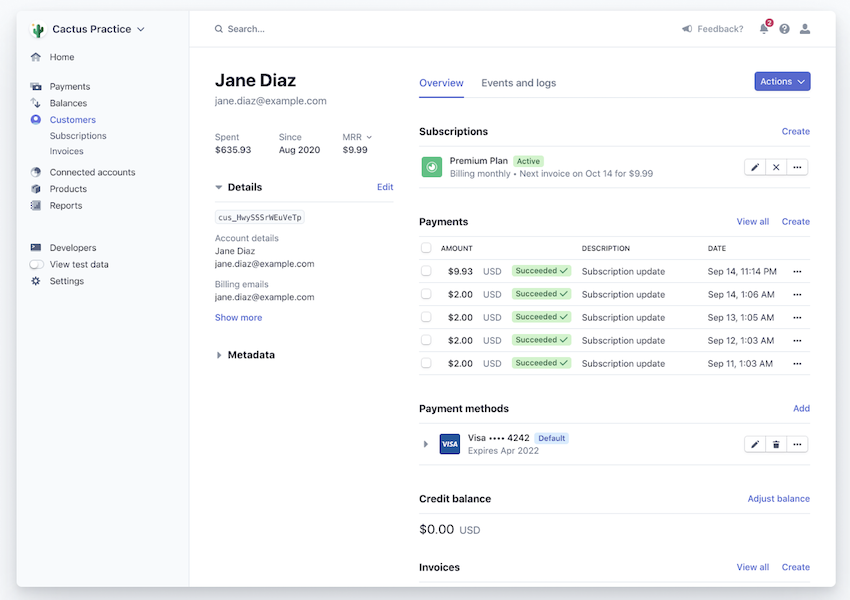
Example of Stripe’s payment dashboard used by startups and SaaS businesses.
Choose Stripe if you:
Process low monthly volume
Want instant setup
Prefer predictable flat pricing
Still comparing payment processors? Our Stripe vs Helcim vs Square comparison shows side-by-side pricing, features, and ideal business types
Who Should Choose Helcim
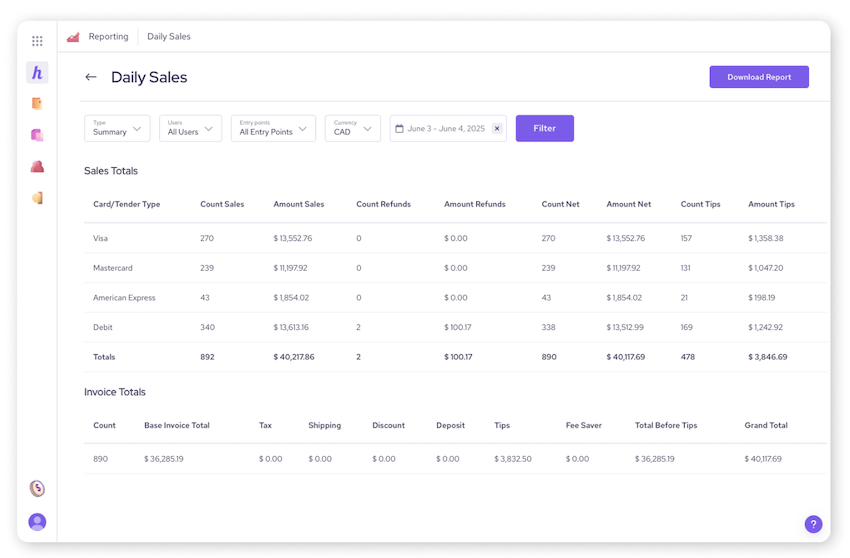
Example of a sales and reporting dashboard similar to Helcim’s real-time payment and invoicing reports.
Choose Helcim if you:
Process $10k+ per month
Want lower fees as you scale
Prefer transparent pricing
We also compare Helcim against other transparent pricing providers in our National Processing vs Helcim breakdown.
ScaleUp Tip
Stripe is ideal for getting started.
Helcim becomes the better choice once transaction volume increases and fees matter more.
For a broader look at low-cost options, see our full guide to the best credit card processors for small businesses, including pricing and fee comparisons.
FAQs: Helcim vs Stripe Fees (2026)
Is Helcim cheaper than Stripe? Helcim is usually cheaper than Stripe once a business processes around $10,000 per month or more. Stripe’s flat-rate pricing is simpler at low volume, but Helcim’s interchange-plus model typically results in lower total fees as volume increases.
Which has lower transaction fees, Helcim or Stripe? Helcim generally has lower transaction fees for mid- to high-volume businesses because it passes through interchange rates with a smaller markup. Stripe charges a fixed 2.9% + 30¢, which can become more expensive at scale.
Is Stripe better for small businesses? Stripe is often better for very small businesses, startups, and SaaS companies processing low monthly volume, mainly because of its fast setup, predictable pricing, and strong developer tools.
Does Helcim charge a monthly fee? No. Helcim does not charge a monthly fee. Pricing is based on interchange-plus rates, and businesses may receive lower markups as their processing volume grows.
Does Stripe offer volume discounts? Stripe does not offer automatic volume discounts for most small businesses. Rates are generally fixed unless you negotiate custom pricing at very high volumes.
Which is better for high-volume businesses? Helcim is usually the better option for high-volume businesses because interchange-plus pricing and volume-based reductions can save hundreds of dollars per month compared to flat-rate pricing.
