
Best B2B Credit Card Processors in the U.S. (2026): Level 2/3 Data Compared
Introduction
B2B credit card processing is very different from standard small-business payments. Interchange costs are higher, invoices are larger, and Level 2 and Level 3 data can significantly reduce fees if handled correctly.
This guide compares the best U.S. B2B credit card processors in 2026, focusing on:
Level 2 / Level 3 data support
Pricing models
Invoicing and ERP integrations
Processors which actually lower costs for B2B transactions
B2B merchants evaluating credit card processors should understand that pricing structures, data requirements, and reconciliation workflows differ significantly from consumer payments. If you’re newer to the space, this overview of how credit card processing works for U.S. businesses is a helpful baseline before diving into Level 2 and Level 3 optimization.
Quick Look
Enterprise & high-volume B2B: Adyen and Worldpay
Mid-market B2B: Stripe and Chase Payment Solutions
SMBs & wholesalers: Helcim and Payment Depot
What Is Level 2 and Level 3 Credit Card Data?
Level 2 and Level 3 data add extra transaction details to B2B and government card payments. This additional data allows card networks to lower interchange rates.
Level 2 data typically includes:
Tax amount
Invoice number
Customer reference
Level 3 data adds:
Line-item details
Product codes
Quantity and unit cost
Freight and duty amounts
Stripe or PayPal processing fees apply
Not all processors support Level 3 data correctly and partial support won’t reduce fees.
While Level 2 and Level 3 data can reduce interchange on eligible transactions, the savings depend heavily on pricing structure. In most B2B environments, interchange-plus pricing models are far more transparent than flat-rate plans, especially for high-value invoices.
For a deeper breakdown of how these pricing models compare in real-world scenarios, see this analysis of flat-rate vs interchange-plus pricing and which actually saves more.
Fee Model Comparison (Overview)
| Feature | Why It Matters for B2B |
|---|---|
| Level 2/3 data support | Lowers interchange costs |
| Interchange-plus pricing | More transparent at high volume |
| ERP & accounting integrations | Faster reconciliation |
| Invoicing & virtual terminals | Required for B2B sales |
| Custom pricing | Essential for large transactions |
Best B2B Credit Card Processors (2026)
Ayden (Enterprise B2B)
| Feature | Details |
|---|---|
| Level 2/3 data | Full support |
| Pricing model | Interchange-plus (custom) |
| Best for | Enterprise, global B2B |
| Integrations | SAP, Oracle, NetSuite |
| Drawback | Not SMB-friendly |
Best for: Large enterprises processing high-value B2B transactions globally.
Large enterprises processing global B2B transactions often narrow their choice to Adyen or Worldpay. Both support full Level 3 data and custom interchange-plus pricing, but they differ in contract structure, international coverage, and ERP depth. A direct Adyen vs Worldpay enterprise comparison breaks down where each platform performs best.
Worldpay (Enterprise & Large Mid-Market)
| Feature | Details |
|---|---|
| Level 2/3 data | Full support |
| Pricing model | Custom interchange-plus |
| Best for | Large B2B merchants |
| Integrations | ERP & invoicing tools |
| Drawback | Contracts can be complex |
Stripe (Modern B2B SaaS)
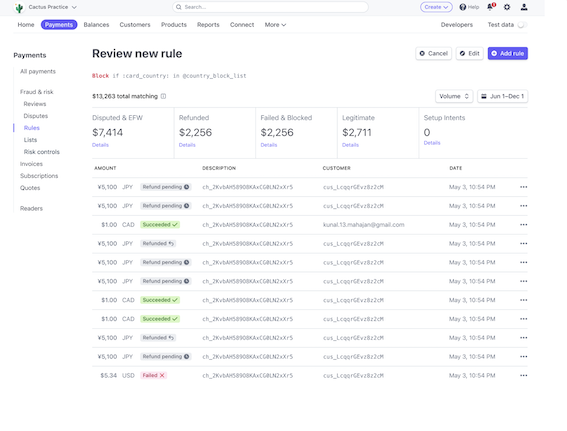
Stripe dashboard in test mode showing B2B credit card transactions and invoice payments (demo environment).
| Feature | Details |
|---|---|
| Level 2/3 data | Level 2 + partial Level 3 |
| Pricing model | Flat-rate (custom for B2B) |
| Best for | SaaS & tech-driven B2B |
| Integrations | Strong API ecosystem |
| Drawback | Higher fees without custom rates |
Stripe is frequently chosen by SaaS and tech-enabled B2B companies due to its flexible APIs and invoicing tools. However, Stripe’s pricing and data capabilities differ significantly from more traditional processors. Businesses comparing modern platforms should also review how Stripe stacks up against point-of-sale-oriented providers in this Stripe vs Square comparison.
Chase Payment Solutions (Traditional B2B)
| Feature | Details |
|---|---|
| Level 2/3 data | Full support |
| Pricing model | Interchange-plus |
| Best for | Established U.S. B2B |
| Integrations | Chase ecosystem |
| Drawback | Less flexible tech stack |
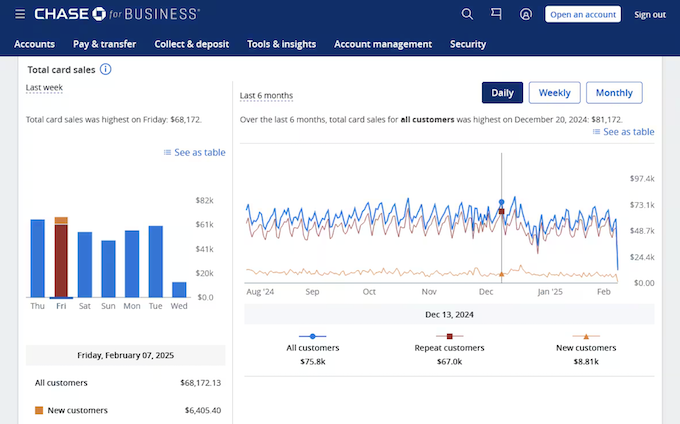
Chase Payment Solutions merchant portal showing B2B credit card transactions and reporting data (demo environment).
Helcim (SMB B2B)
| Feature | Details |
|---|---|
| Level 2 / Level 3 data | Level 2 supported with limited Level 3 capability |
| Pricing model | Interchange-plus (transparent, no hidden fees) |
| Best for | U.S. SMBs, wholesalers, and invoice-based B2B sellers |
| Integrations | QuickBooks, built-in invoicing, virtual terminal |
| Drawback | Not designed for enterprise or high-complexity ERP environments |
For U.S.-based SMBs and wholesalers, Helcim and Payment Depot are popular options due to transparent pricing and invoice-friendly workflows. Businesses deciding between these two models (markup-free interchange vs wholesale membership pricing) may want to review this Helcim vs Payment Depot comparison.
Payment Depot (Wholesale B2B)
| Feature | Details |
|---|---|
| Level 2/3 data | Level 2 supported |
| Pricing model | Wholesale interchange |
| Best for | High-volume SMB B2B |
| Integrations | Standard invoicing |
| Drawback | Monthly membership fee |
Which B2B Processor Should You Choose?
Choose Adyen or Worldpay if you:
Process large B2B transactions
Need full Level 3 data
Operate internationally
Choose Stripe or Chase if you:
Run B2B SaaS or services
Need strong invoicing workflows
Require reliable U.S. coverage
Choose Helcim or Payment Depot if you:
Are a U.S. SMB or wholesaler
Require transparent interchange pricing
Process invoices and virtual terminal payments
If your business operates across multiple sales models, it may help to explore processors by category. This breakdown of the best credit card processors by business type can help narrow options based on transaction size, volume, and industry.
ScaleUp Tip
The best B2B credit card processor depends on transaction size, volume, and data requirements.
Enterprise B2B: Adyen or Worldpay
Mid-market B2B: Stripe or Chase
SMB B2B: Helcim or Payment Depot
If Level 2 and Level 3 data matter to your business, choosing the right processor can save thousands per year in interchange costs.
FAQs: B2B Credit Card Processing
What is Level 3 credit card processing? Level 3 processing includes detailed line-item data that can significantly reduce interchange fees on B2B and government cards.
Do all processors support Level 3 data? No. Many claim support but only provide partial data, which does not qualify for reduced interchange.
Is interchange-plus better for B2B? Yes. Interchange-plus pricing is usually cheaper and more transparent for high-value B2B transactions.
Can SMBs benefit from Level 2 data? Yes. Even Level 2 data alone can reduce fees for B2B and corporate card payments.
Are flat-rate processors bad for B2B? Flat-rate pricing is simpler, but often more expensive at higher B2B volumes unless custom rates are negotiated.
